
Accessible parking isn’t just about providing convenience to individuals with disabilities; more importantly, it is about giving them access to ensure fairness, safety, and equal opportunity in everyday life. This is why accessible parking laws include steep fines and penalties to deter violations.
The Americans with Disabilities Act (ADA) sets the requirements and standards for accessible parking, while state and local laws enforce them, including fines, penalties, and towing.
This guide outlines the most common accessible parking violations committed by both drivers and businesses, as well as the fines and penalties associated with these infractions.
Accessible Parking Violations: Fines by State
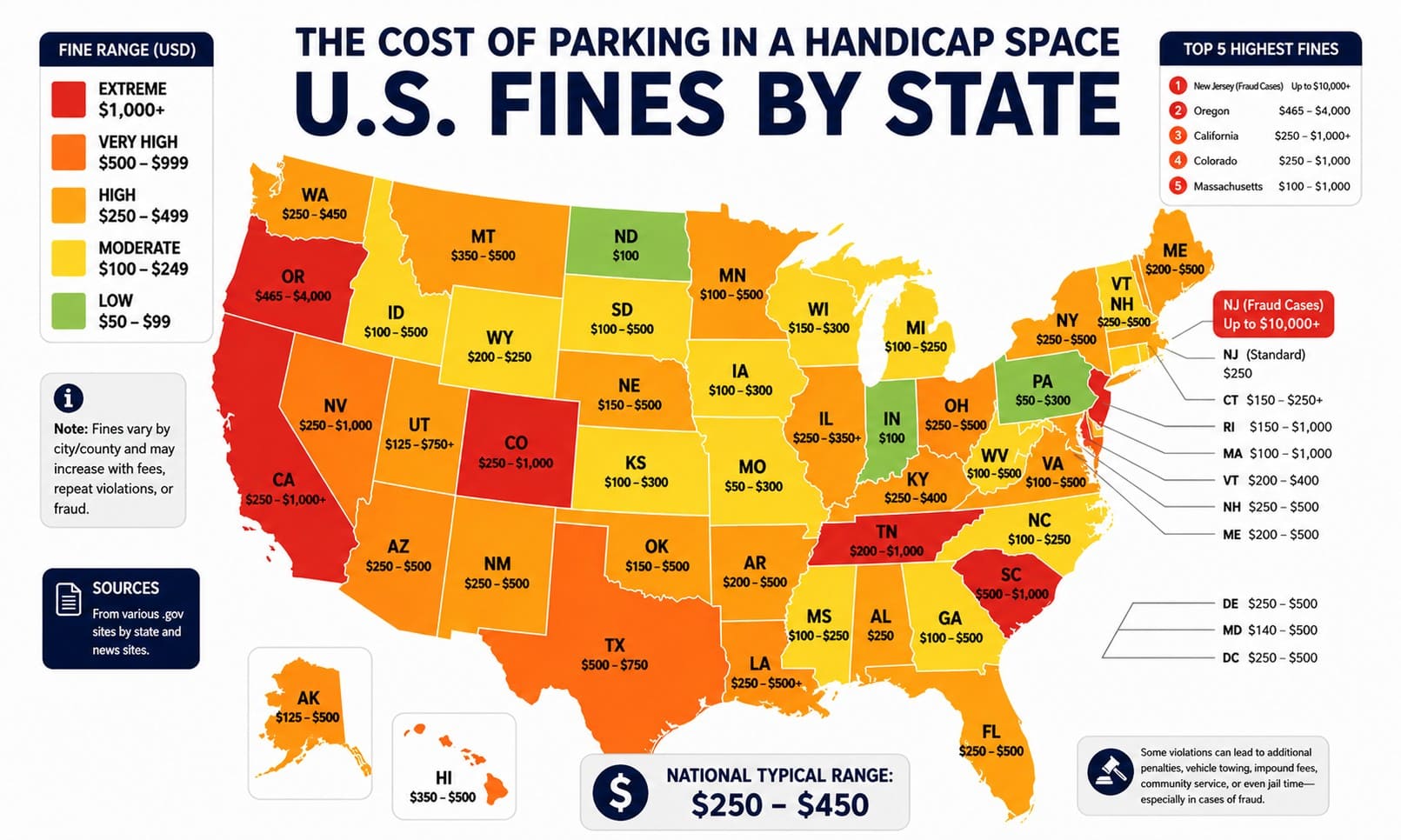
A U.S. map showing handicap parking fines by state
Key Takeaways:
- Many states impose fines between $200 and $500 for common accessible parking violations.
- Some states, including California, Colorado, and Tennessee, impose fines of up to $1,000 for accessible parking violations.
- Fines for fraud cases in New Jersey can reach up to $10,000.
7 Most Common Accessible Parking Violations Drivers Make
Many cases of non-compliance occur because people misunderstand how strict the accessible parking laws are. Here are the most common accessible parking abuses and violations drivers commit.
1. Using an accessible parking space briefly
If you think that briefly using an accessible parking space, even for as short as two minutes, is not a violation, think again. Most states impose fines for unauthorized use of accessible space, regardless of the duration.
2. Parking in the striped access aisle
The ADA requires the placement of striped access aisles next to accessible parking spaces to make it easier for people with disabilities to use their wheelchairs, ramps, lifts, and other similar equipment. When a vehicle or any object occupies the striped area, it prevents individuals with disabilities from accessing their designated parking space.
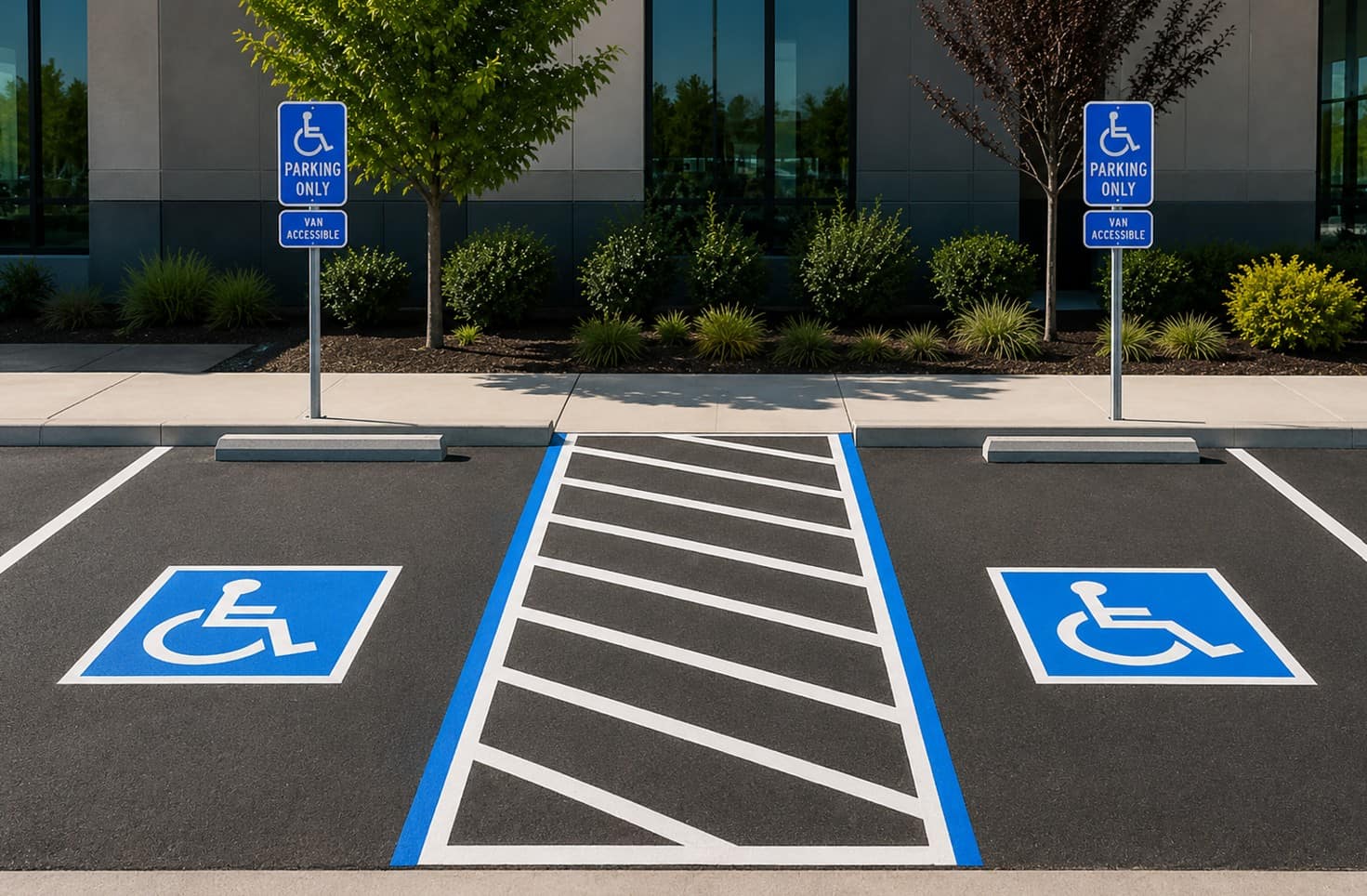
Two accessible parking spaces sharing a striped access aisle.
3. Parking partially in an accessible parking space or aisle
Accessible parking laws are designed to ensure full, unobstructed access for individuals who need extra space to enter and exit vehicles while using wheelchairs, ramps, or lifts. For this reason, even the slightest encroachment, such as a bumper crossing into the marked space, is considered illegal.
4. Turning the hazard lights on
Hazard lights or emergency flashers are used to signal that a vehicle is stopped or moving outside normal conditions and thus could pose a risk to others. Using them does not give anyone the right to take advantage of accessible parking spaces.
5. Using the space without a valid permitor plate
Accessible parking is reserved for vehicles displaying a valid, state-issued disability permit or license plate. Without one, authorities and enforcement officers have no way to verify a person’s eligibility, so using the space is considered unauthorized parking.
6. Using someone else’s permits or placards
Placards are issued to individuals, not vehicles. People with disabilities can use them as either the driver or passenger, but if they are not present, using these permits is considered a violation or possibly even a misdemeanor.
Some states consider borrowing placards as a form of fraud, which carries higher fines and penalties.
7. Blocking or misusing a van accessible space
Van accessible spaces are designed for vehicles with lifts and thus require extra clearance; they are wider compared to standard accessible spaces.
Blocking or misusing these accessible parking spaces is subject to steep fines and penalties.
3 Most Common Accessible Parking Violations Businesses Make
The ADA requires businesses that provide parking for their customers or employees to also designate accessible parking spaces. Unfortunately, not all businesses abide by these rules — here are the most common violations they commit.
1. Failure tomeet ADA Signage requirements
If Accessible Parking Signs do not meet ADA requirements for visibility, height, and designation, enforcement becomes difficult or even impossible. For example, Tow-Away Signs should be designed and installed in accordance with the regulations to make towing enforceable.
2. Inadequateaccessible parking spaces
Businesses are required to provide a certain number of accessible spaces based on total parking capacity. Non-compliance may lead to complaints, fines, or, in some cases, lawsuits.
| Total Parking Spaces | Minimum Accessible Spaces |
|---|---|
| 1 to 25 | 1 |
| 26 to 50 | 2 |
| 51 to 75 | 3 |
| 76 to 100 | 4 |
| 101 to 150 | 5 |
| 151 to 200 | 6 |
| 201 to 300 | 7 |
| 301 to 400 | 8 |
| 401 to 500 | 9 |
| 501 to 1000 | 2 percent of total |
| 1001 and over | 20 plus 1 for each 100 over 1000 |
3. Accessible space is too narrow
Allocating the right number of handicap parking spaces based on the lot size is not enough. Each one should also meet ADA requirements for the size and layout of the accessible parking space to ensure they are useful and functional.
People often commit accessible parking violations because of false assumptions and misinterpretations of the rules and regulations. What seems like “just a minute” or “just a little over the line” can still block access for someone who genuinely needs that space to navigate safely and independently.
Whether you’re a driver or a business owner, understanding the specifics of accessible parking laws can help promote equal access in everyday life and avoid fines and penalties.
Disclaimer: This article is intended for general informational purposes only and does not constitute legal advice. Accessibility requirements under the ADA and enforcement rules, penalties, and fines for handicap parking violations vary by state and local jurisdiction and may change over time. Readers and businesses should consult with local authorities or a qualified legal professional to confirm current laws and requirements applicable to their specific location.