
Businesses use Private Parking Signs to ensure their customers and staff can easily find parking upon arrival. These signs also prevent unauthorized use of parking spaces by nearby residents and commuters. However, these signs are only useful and enforceable if they meet certain legal requirements.
In this guide, we share the most basic or common legal requirements for using Private Parking Signs; what it does not cover are specific local rules and regulations, so make sure to always check your city or municipal codes pertaining to business signage. Let’s get started!
What Counts as “Private Parking” for Businesses?
Private parking is not limited to residential property. If you operate a brick-and-mortar store, say a restaurant, laundromat, salon, or any type of commercial establishment, your parking lot is considered private property, which gives you control over how and when to use it.
However, your “control” is limited to your property, and your Private Parking Signs are enforceable only within its boundary. Moreover, you cannot post signs on public streets or sidewalks or extend enforcement beyond your lot.
5 Types of Parking Signs Businesses Can Use Legally
Businesses are commonly allowed to use these five types of Parking Signs, provided they are installed securely and properly, i.e., they are visible and accessible.
1. Customer Only Parking Signs
- Customer Parking Only
- Parking for [Business Name] Customers Only
- Customers Only While on Premises
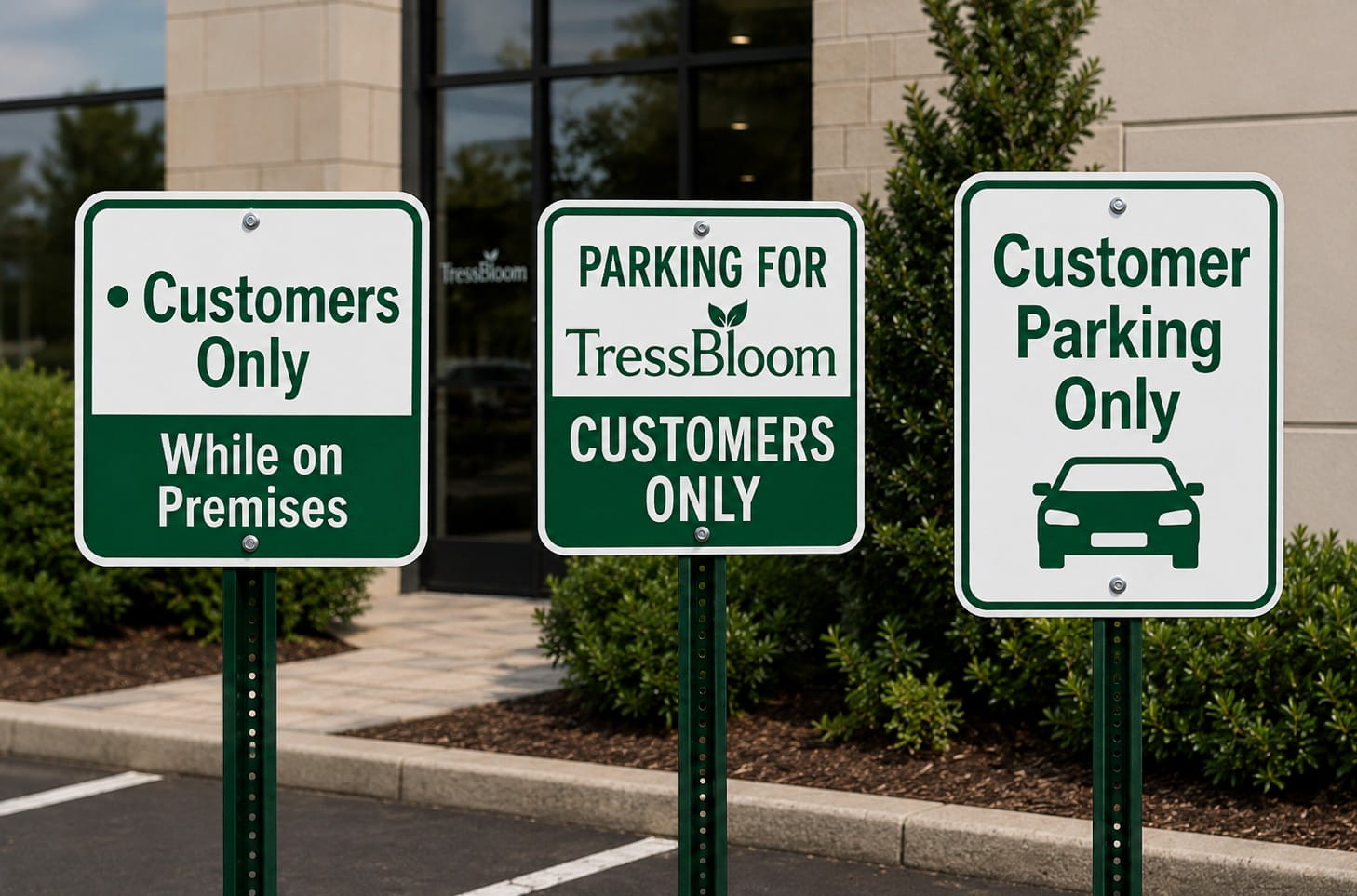
Three green and white parking signs restricting vehicle parking to customers only
These Parking Signs are widely enforceable and serve as the baseline for private parking control.
2. Time-Limited Parking Signs
- 30-Minute Parking
- 2-Hour Parking Limit
- No Overnight Parking
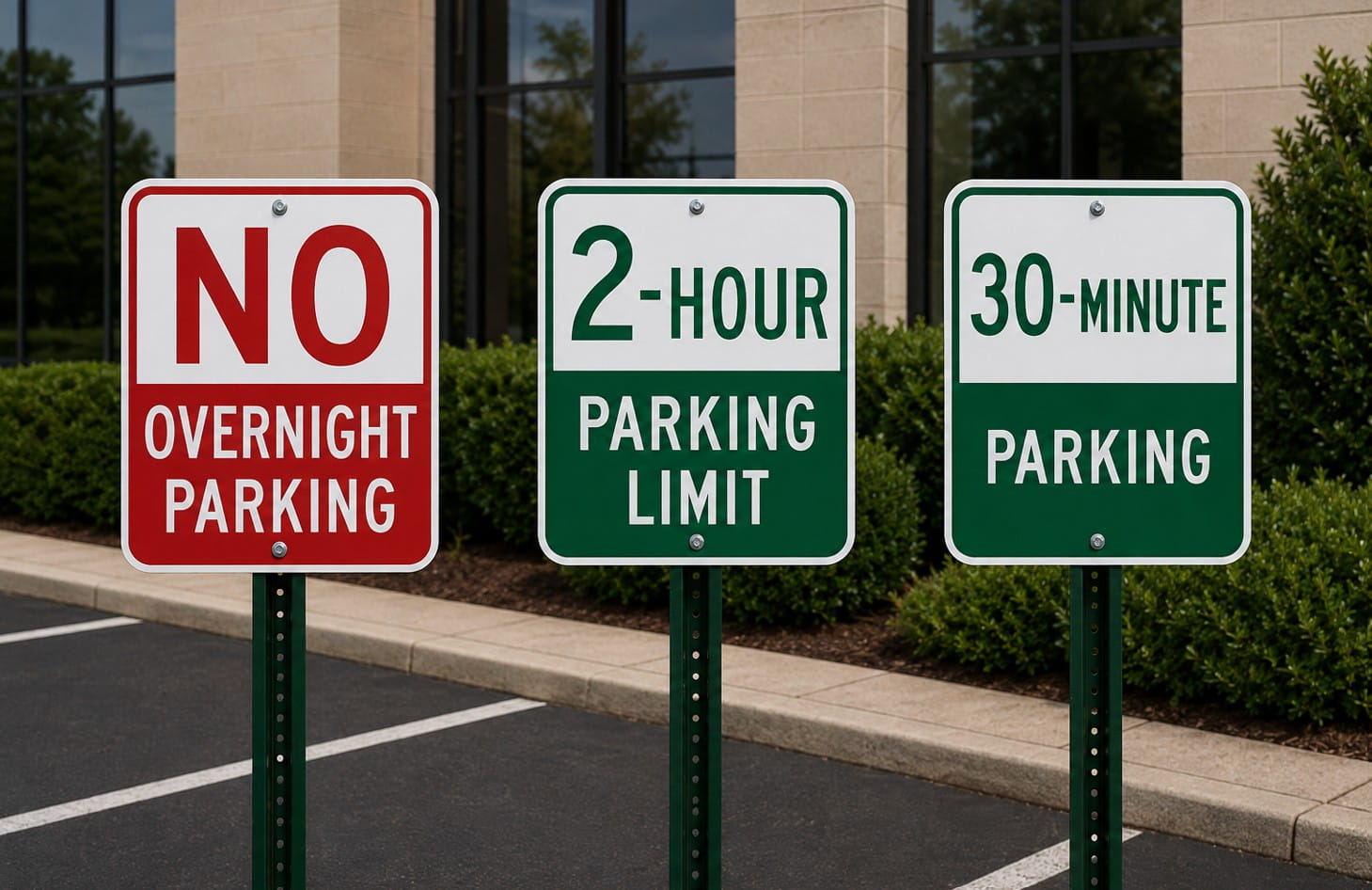
Row of parking regulation signs displaying specific time limits and restrictions
Time restrictions ensure more customers can use the parking spaces rather than a few cars staying all day and prevent long-term or non-customer parking.
3. Tow-Away Signs
- Unauthorized Vehicles Will Be Towed at Owner’s Expense
- Tow-Away Zone
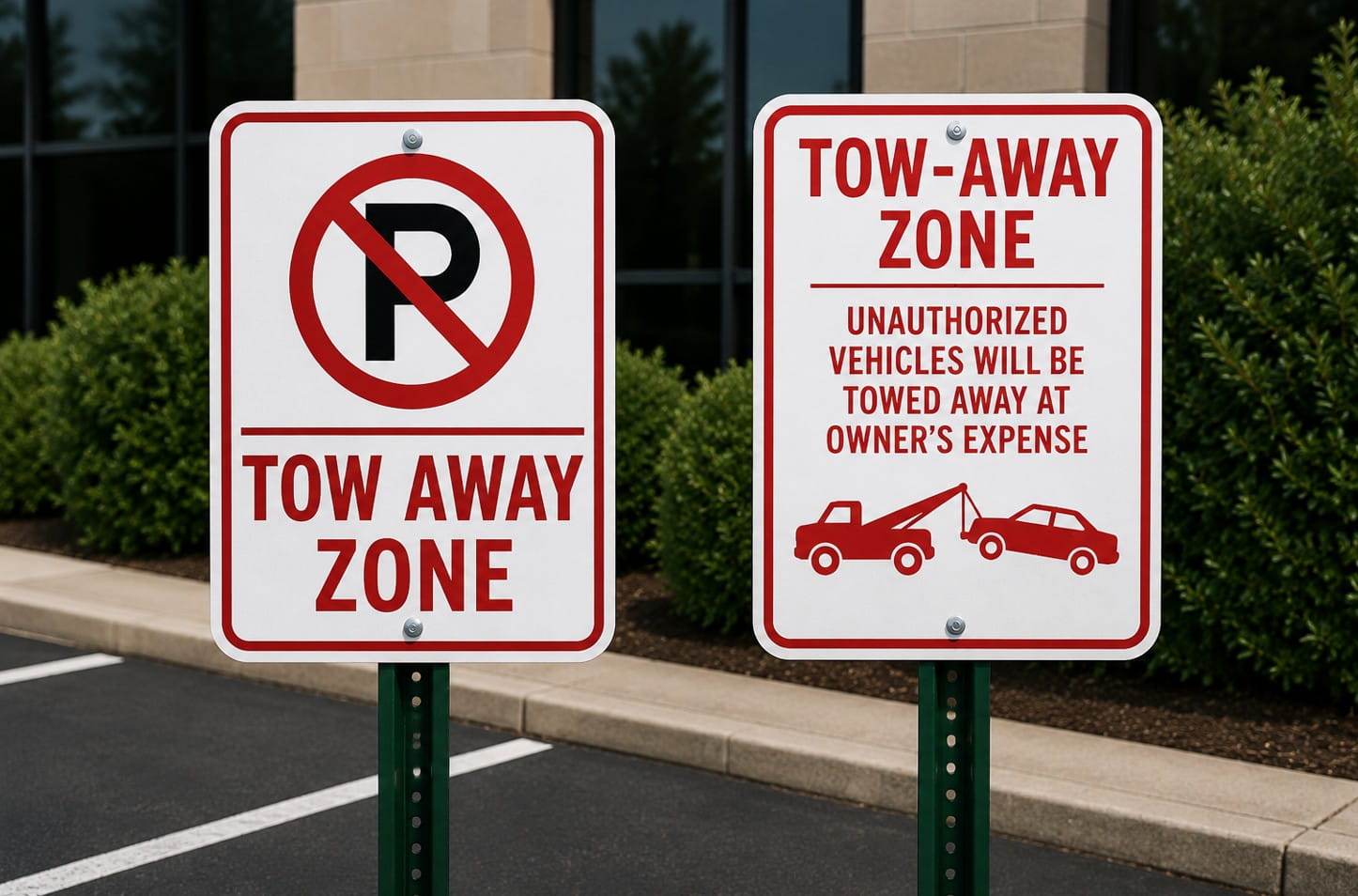
Two warning signs marking a strictly enforced tow-away zone
A Tow-Away Sign is a notice that warns drivers that their vehicle will be removed (towed) if they park in a specific area without permission. To ensure a tow is legally valid and to protect the business from liability, the posted signage must comply with state and local ordinances. It’s worth noting that some states require the towing company's name and contact number to be displayed visibly on the Tow-Away Signs.
4. Permit Signs or Reserved Parking Signs
- Permit Parking Only Sign
- Reserved Parking Sign
- Employee Parking Only Sign
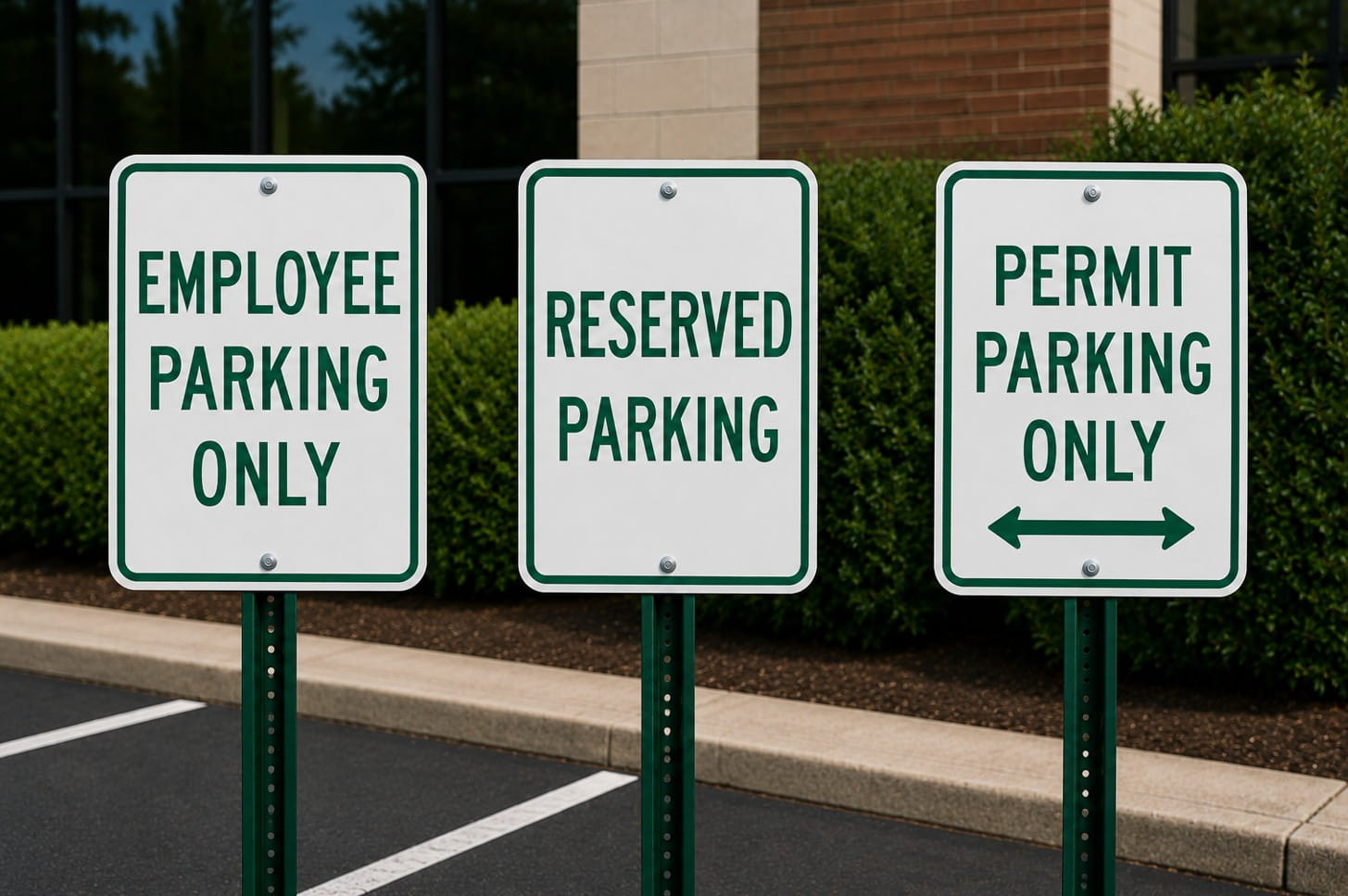
Three signs indicating restricted parking for authorized personnel and permits
Assigning spaces to customers, staff, deliveries, or company vehicles can help reduce confusion and waiting times and keep the lot well organized.
5. Accessible Parking Signs
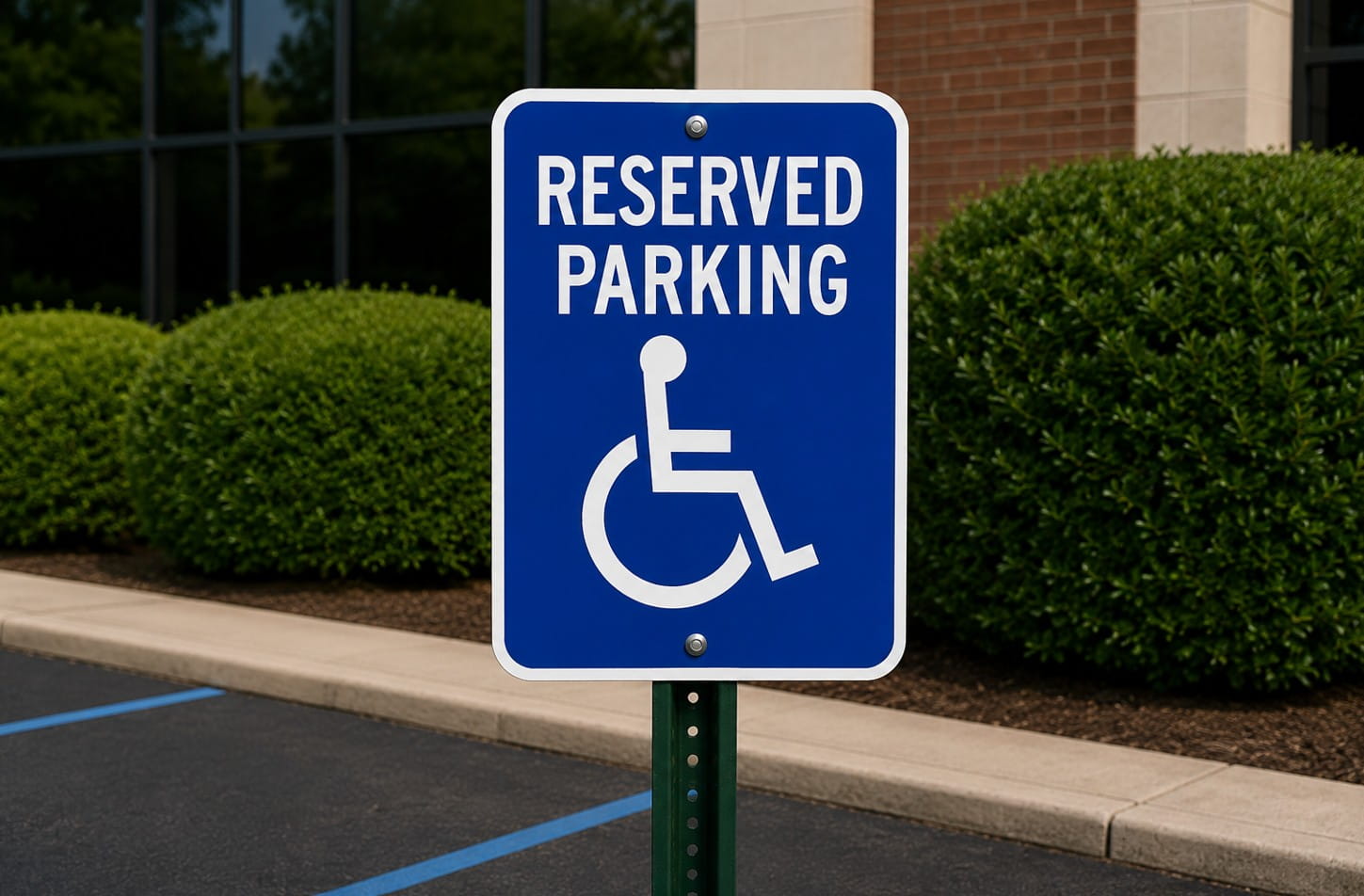
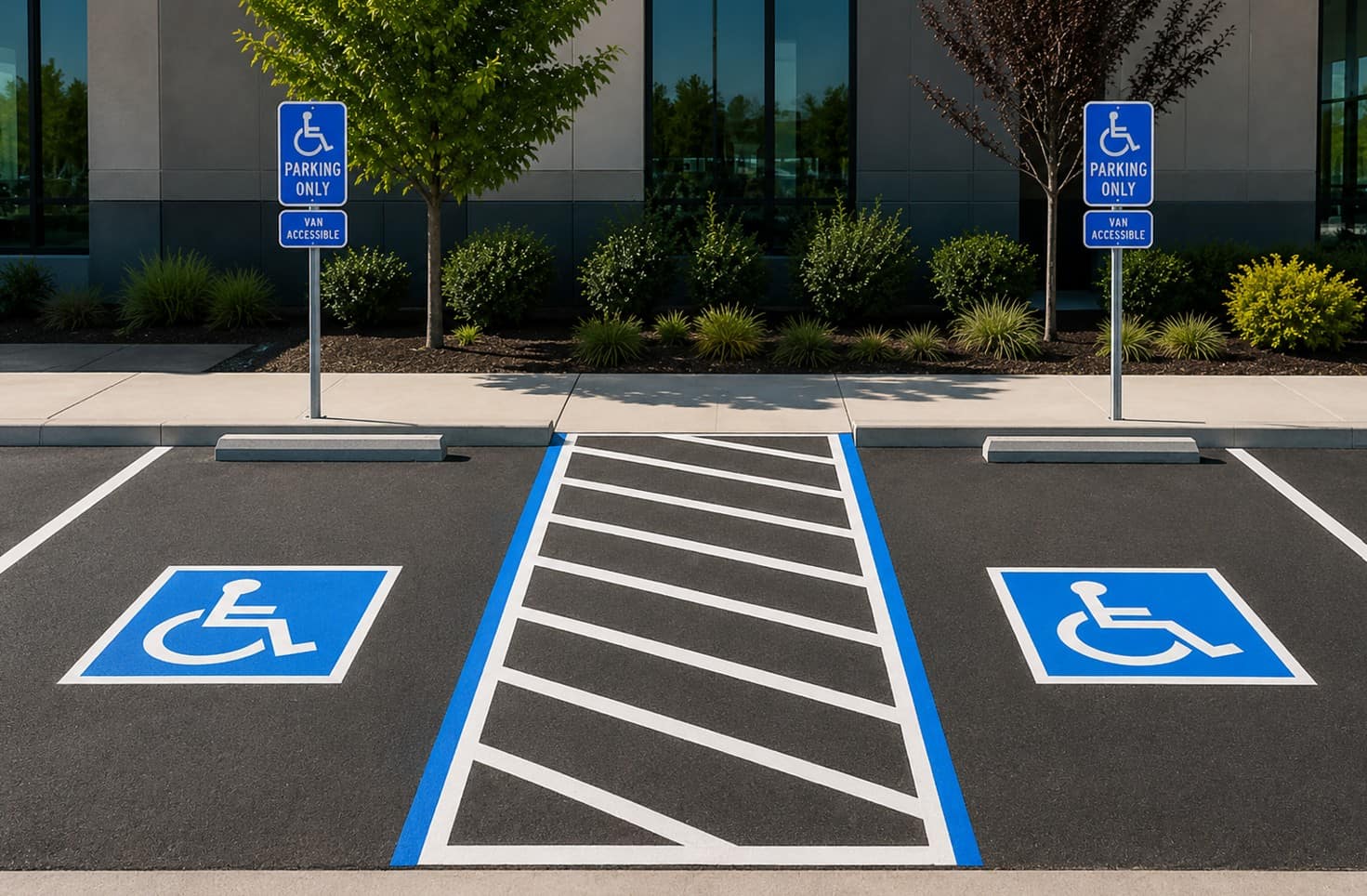
Blue reserved parking sign with a white wheelchair accessibility symbol
If your business provides parking spaces for customers or employees, the Americans with Disabilities Act (ADA) requires that you also allot a certain number of accessible parking spaces (with proper signage) based on the property size.
| Total Parking Spaces | Minimum Accessible Spaces |
|---|---|
| 1 to 25 | 1 |
| 26 to 50 | 2 |
| 51 to 75 | 3 |
| 76 to 100 | 4 |
| 101 to 150 | 5 |
| 151 to 200 | 6 |
| 201 to 300 | 7 |
| 301 to 400 | 8 |
| 401 to 500 | 9 |
| 501 to 1000 | 2 percent of total |
| 1001 and over | 20 plus 1 for each 100 over 1000 |
Under the 2010 ADA Standards for Accessible Design, accessible parking signs must also meet these two critical requirements:
- The Accessible Parking Signs must display the International Symbol of Accessibility.
- These signs must be mounted high enough to stay visible, usually at least 60 inches from the ground.
4 Types of Parking Signs Businesses Cannot Use
Although you can use parking signs on your property, there are clear limits on what they can legally say or imply. Specific rules may vary by state, city, and municipality, but there are practices and certain types of parking signs that businesses are not typically allowed to use.
1. Fake Fines Signs or Penalty Signs
If you want to post a sign that says “$500 Fine for Illegal Parking” to deter non-customers from using your parking lot, it’s important to note that businesses cannot issue legally binding fines like government tickets. Only government authorities (e.g., city officials, police, or local enforcement agencies) can issue official fines or citations.
2. Government-Style Signage
Private Parking Signs that say “City Enforced Parking” or feature designs that imitate official traffic signs and road markings are not allowed.
3. Parking Signs on Public Property
You cannot put up Private Parking Signs on sidewalks, government-owned lots, streets, roadside parking, and public right-of-way areas.
4. Signs Indicating Vague Threats
Parking signs that say “Violators will be prosecuted” are intimidating and misleading, as no business can enforce this rule.
Best Practices to Ensure Parking Signs Meet Legal Requirements
These are general recommendations to help you use signs in a way that meets most legal requirements. You may need to check local ordinances to ensure full compliance.
1. Entrance Visibility
Place your parking signs and rules so drivers can see them easily before parking. Many state laws require signage at every entrance.
If the signs are installed properly at the entrance, businesses can enforce their parking rules. For example, some states like Florida allow property owners to tow unauthorized vehicles, but only if the signs are immediately visible at the entrances and they meet other requirements.
2. Size and Readability
Private Parking Signs must be easy to read from a vehicle to be useful and enforceable. Placement also matters to ensure readability, especially with Accessible Parking Signs, which ADA requires to be mounted at least 60 inches from the ground to the bottom of the sign, making them visible even when the parking lot is packed.
3. Clear Communications
Private Parking Signs must convey a clear message. For example, Tow-Away Signs must clearly state that violations will result in towing, or the business establishment can enforce it.
4. Towing Company Information
Before using a Tow-Away Sign, check your local code to ensure it complies with the law. Some states require businesses to include the towing company’s name and its 24-hour contact number.
5. Multiple Placement Within the Lot
A single Parking Sign at the entrance may not be enough. Depending on the size of the parking lot, businesses may need multiple signs to make them visible from every spot.
Shared Parking Lots: Who Sets the Rules?
In strip malls, shared parking lots, and multi-tenant properties, the usual arrangement is to have a designated property manager. This way, there’s only one set of rules, and the signage is consistent throughout the parking space.
No tenant or resident may impose their own parking rules to avoid confusion or difficulty in enforcing them.
Common Mistakes When Using Parking Signs
- No signage at entrances
- Text that’s too small that they’re hard to read from a vehicle
- Signs with missing towing details (or other local-specific requirements)
- Using signs without checking local codes
- Threatening or misleading message
Parking Signs can be an effective tool for businesses to manage their parking spaces — but only when used within legal boundaries. By sticking to the most commonly used types of signs, avoiding misleading language, and ensuring compliance with federal laws and state and local regulations, you can protect yourself from liability while maintaining an orderly, accessible parking environment.
Disclaimer: The information in this article is intended as a general guide and should not be taken as legal advice. Parking regulations, signage requirements, and towing laws can vary widely by state and local area. Always check with local authorities or a legal professional to confirm what applies to your specific situation.